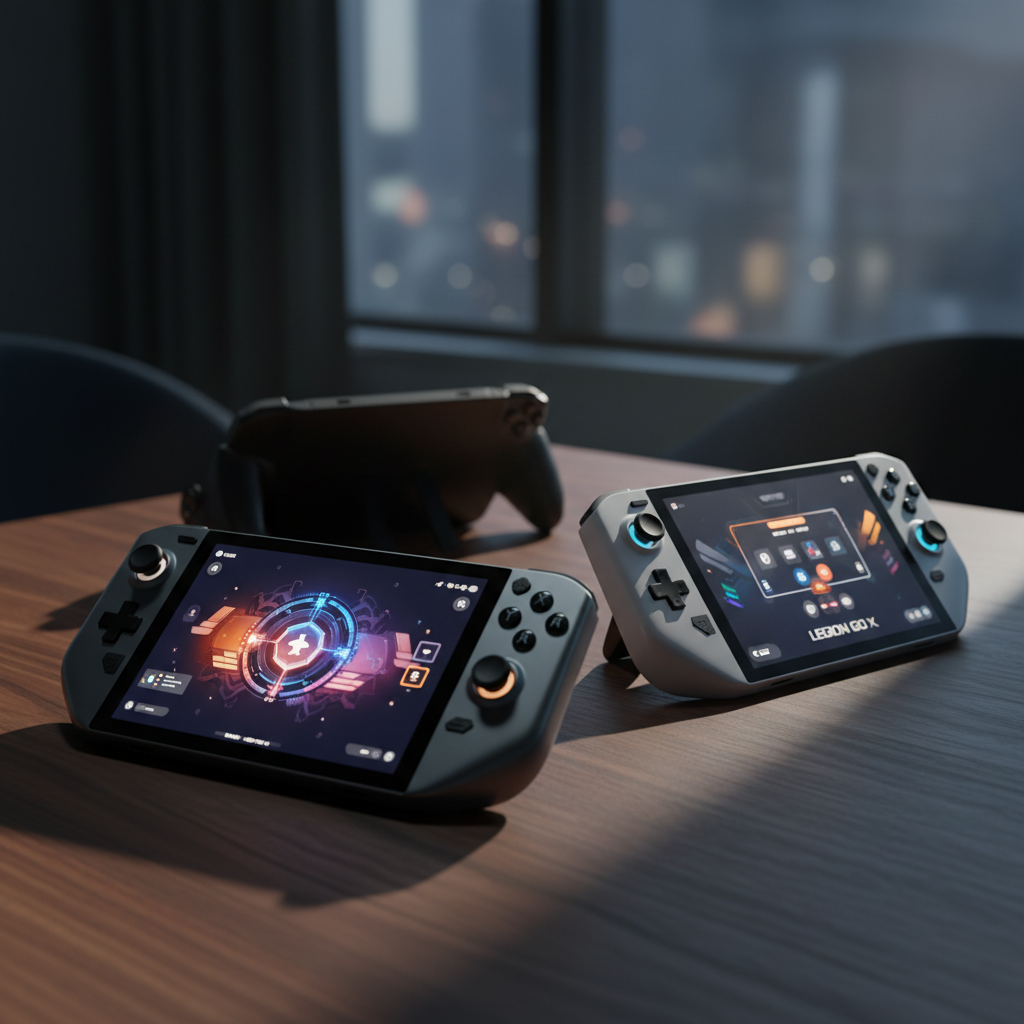
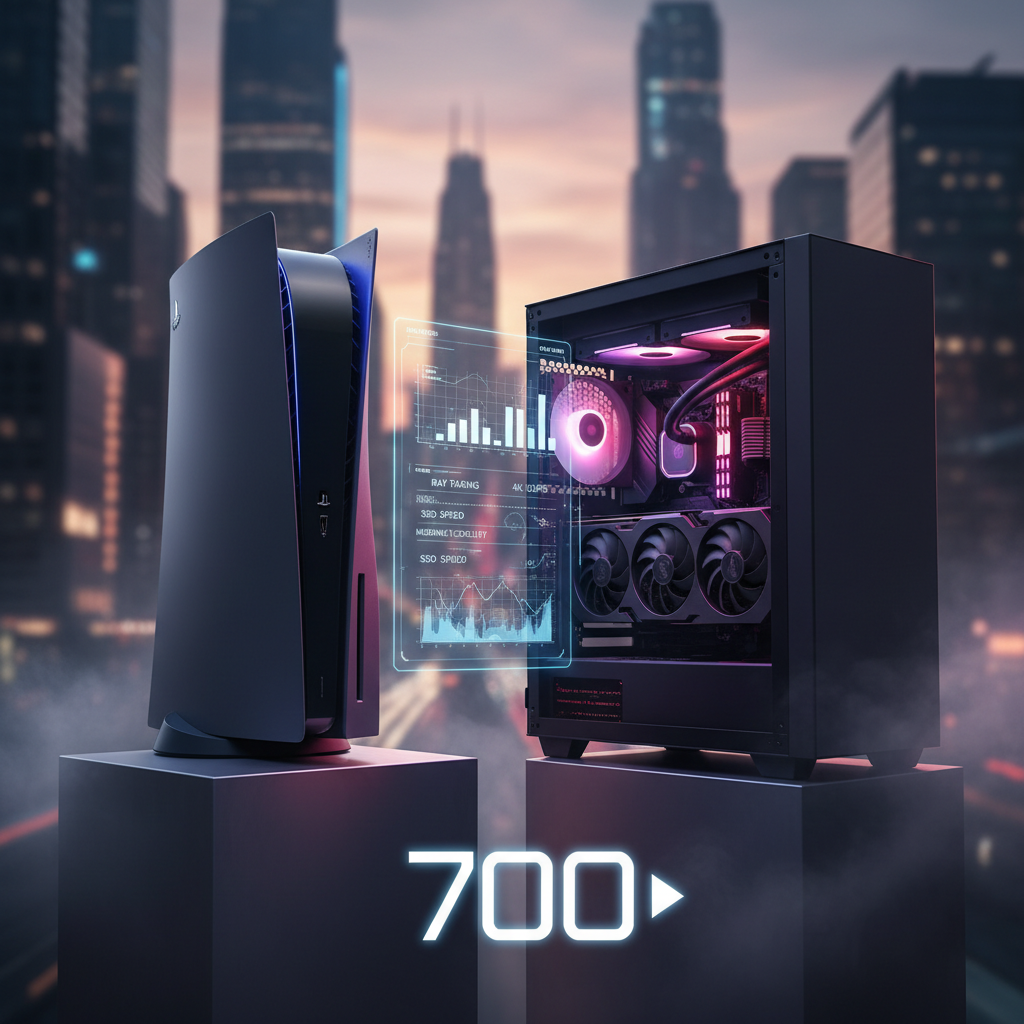
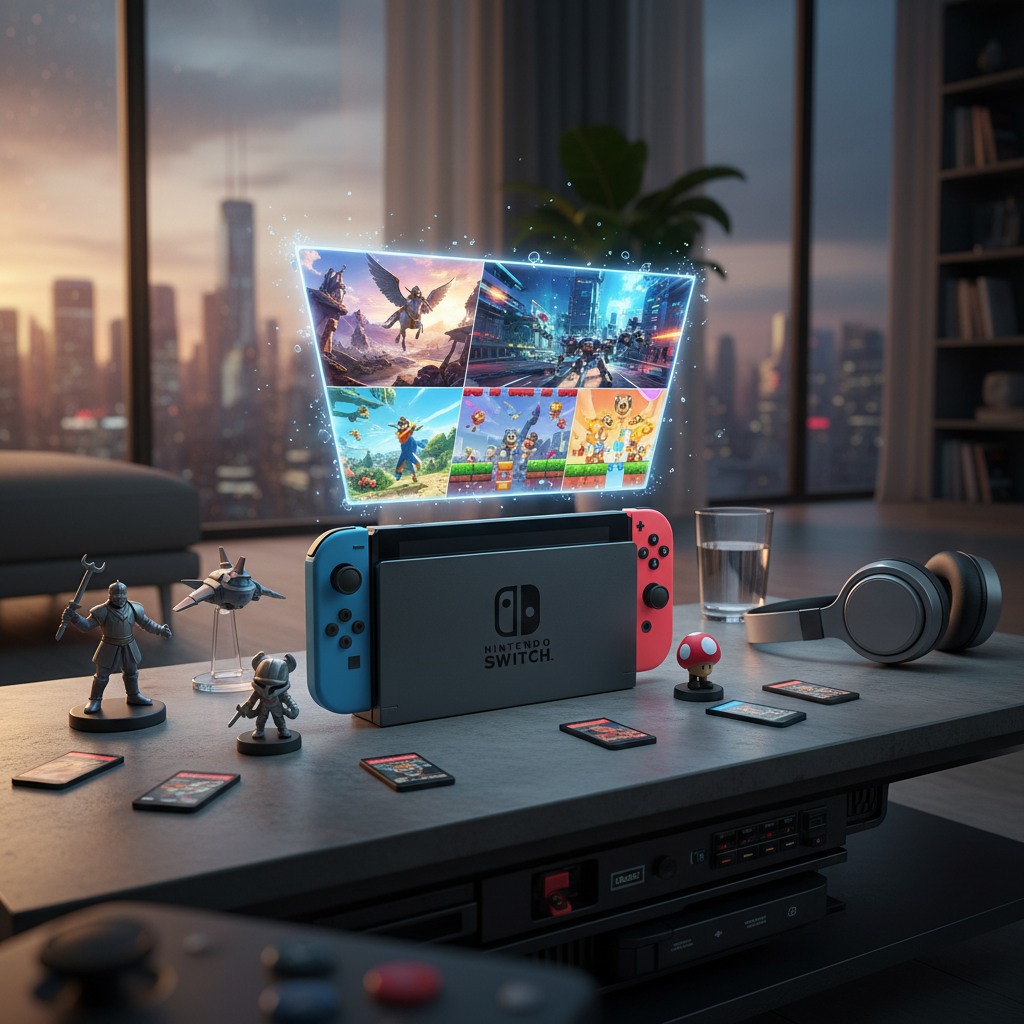
Cloud Gaming in 2026: Is a $10/Month Subscription Finally Enough?
After years of promises, 2026 feels like a tipping point for cloud gaming. But will a standard $10/month subscription truly deliver on the dream?

- 5G and fiber optic expansion significantly enhance cloud gaming reliability.
- Hardware and software optimizations reduce latency, a long-standing hurdle.
- Major players like Xbox Cloud Gaming and GeForce NOW refine their offerings.
- The $10/month price point emerges as a crucial battleground for consumer adoption.
- Library access and game ownership models remain key differentiators.
- Economic pressures on consumers make subscription value more critical than ever.
The State of Cloud Gaming in 2026: Is a $10/Month Subscription Finally Enough?
For over a decade, enthusiasts have heralded cloud gaming as the future, promising high-fidelity gameplay without the need for expensive consoles or powerful PCs. Yet, the promise has often outpaced the reality. As we step into 2026, the landscape has matured significantly. Infrastructure has improved, technology has advanced, and major players have refined their offerings. But the burning question remains: has the industry finally hit the sweet spot where a $10/month subscription is genuinely enough to deliver a compelling, mass-market cloud gaming experience in the US?
The Evolution of Infrastructure: 5G and Fiber Take Center Stage
One of the biggest hurdles for cloud gaming has always been latency and bandwidth. In 2026, the nationwide rollout of 5G networks, especially the mid-band and millimeter-wave frequencies, has made a substantial difference. Combined with continued fiber optic expansion into suburban and even some rural areas, the average American internet connection is far more capable of handling demanding game streams than it was just a few years ago.
This isn't to say every corner of the US has perfect connectivity, but the critical mass of high-speed, low-latency internet users has grown significantly. This widespread improvement directly translates to a smoother, more responsive cloud gaming experience, minimizing the frustrating stutters and input lag that plagued early iterations of these services.
Technological Refinements: From Servers to Code
Beyond just network infrastructure, the underlying technology supporting cloud gaming has also seen considerable advancements. Server-side hardware, specifically optimized GPUs and CPUs designed for multi-user streaming, are more efficient and powerful. Furthermore, advancements in encoding and decoding algorithms mean that more visual information can be transmitted with less data, reducing bandwidth requirements without a significant drop in visual fidelity.
Modern cloud gaming platforms also leverage sophisticated AI-driven algorithms to dynamically adjust quality based on real-time network conditions. This adaptive streaming means the experience degrades less often and recovers more gracefully when internet fluctuations occur. While a true 'no compromise' experience is still a lofty goal, the gap between local and streamed gameplay has undoubtedly narrowed.
The $10/Month Battlefield: What You Get for Your Buck
In 2026, the $10/month price point (or its equivalent within larger bundles) has become a critical battleground for cloud gaming providers.
- Xbox Cloud Gaming (part of Game Pass Ultimate): Still a dominant force, Game Pass Ultimate at roughly $17/month offers cloud streaming as a key component alongside a massive downloadable library. For many, the cloud component is a 'bonus' rather than the sole driver. However, specific tiers might emerge that focus more exclusively on cloud access at a lower price point, potentially hovering around $10 for a curated selection.
- NVIDIA GeForce NOW: This service thrives on its 'bring your own games' model, letting you stream titles you already own from popular digital storefronts. Its premium tiers, often around $10-$20 depending on the plan, offer access to higher-end GPUs, longer session times, and ray tracing capabilities. For those who prioritize graphical fidelity and ownership, this remains a strong contender. The $10 tier often provides 'Priority' access, significantly reducing queue times and bumping up graphics quality.
- Luna (Amazon): Amazon's offering has found its niche, often bundled with Prime subscriptions, making the 'effective' cost of cloud gaming lower for existing Prime members. standalone channels can be subscribed to for $5-$10/month, offering curated libraries. This model diversifies access rather than offering a single, monolithic catalog.
- PlayStation Plus Premium/Deluxe: Sony's top-tier subscription, which includes cloud streaming for a selection of PS4/PS5 and classic titles, typically costs around $18/month. While it offers a vast library, the cloud streaming component is often seen as supplemental to the downloadable titles, similar to Xbox. A standalone PS cloud offering at $10 hasn't materialized to date.
For $10/month, consumers can typically expect access to a solid, albeit not always comprehensive, library of games, reliable streaming in 1080p, and reasonably low latency for most genres. 4K streaming and guaranteed priority access usually sit at a slightly higher price point.
The Real Value Proposition: Library, Latency, and Ownership
Is $10/month enough? It depends on the gamer. For casual players, or those looking to sample a wide array of games without commitment, it's an incredibly attractive proposition. They get access to a rotating library of titles, playable on nearly any device, without any upfront hardware cost beyond their internet connection and a compatible controller.
However, for competitive gamers, or those who prefer to own their games and have a persistent library, the $10/month model still presents compromises. Latency, while improved, is rarely imperceptible, especially in fast-twitch genres. The concept of 'renting' games versus owning them remains a psychological barrier for some segments of the market.
Conclusion: A Tipping Point, Not a Universal Solution
By 2026, cloud gaming at a $10/month price point has undeniably grown from a novelty to a genuinely viable option for a significant portion of the US gaming population. The convergence of better infrastructure, technological advancements, and refined service offerings has created a compelling value proposition, particularly for those looking for accessible, flexible gaming without the traditional hardware investment.
It's not yet a one-size-fits-all solution. Hardcore enthusiasts and competitive players may still find themselves seeking the absolute lowest latency and graphical fidelity offered by local hardware. But for the vast majority of mainstream gamers, the $10/month cloud gaming subscription in 2026 finally feels 'enough' – enough convenience, enough quality, and enough access to make true on a decade-long promise. The future of gaming is diversifying, and cloud streaming is now firmly cemented as a powerful, affordable pillar within that future.
- + Access to high-end games without costly hardware upgrades.
- + Play across multiple devices (TV, PC, mobile, tablet).
- + Eliminates downloads, installations, and game patches.
- + Potential for lower entry barrier to premium gaming experiences.
- − Reliance on stable, high-speed internet connection.
- − Input latency still a factor for competitive play.
- − Subscription model may not appeal to all gamers (e.g., game ownership).
- − Varying game libraries and quality across services complicates choice.
Frequently asked questions
What resolution can I expect from a $10/month cloud gaming service in 2026?+
Most $10/month cloud gaming services in 2026 will reliably offer 1080p resolution. Some premium tiers a bit higher in price might offer 4K, but 1080p is the standard for this price point.
Do I need a special controller for cloud gaming?+
While you can often use a keyboard and mouse with cloud gaming on PC, a standard Bluetooth or USB gamepad (Xbox, PlayStation, or generic PC controllers) is recommended for the best experience across most devices.
What internet speed is recommended for cloud gaming in 2026?+
For 1080p cloud gaming, a stable internet connection of at least 25-35 Mbps is generally recommended. For 4K streams, you would need 50Mbps or higher.
Can I play my purchased PC games on cloud gaming services?+
Yes, services like NVIDIA GeForce NOW allow you to stream games you already own from platforms like Steam, Epic Games Store, and GOG. Other platforms typically offer their own curated libraries.
Is input lag still a problem for cloud gaming in 2026?+
Input lag has significantly improved due to better infrastructure and technology. While it's rarely completely imperceptible to sensitive players, it's much less of a concern for most genres and casual gameplay than in previous years.